
Categories
Market InsightsPublished October 23, 2026
Do Price Reductions Mean Home Prices Are Falling?

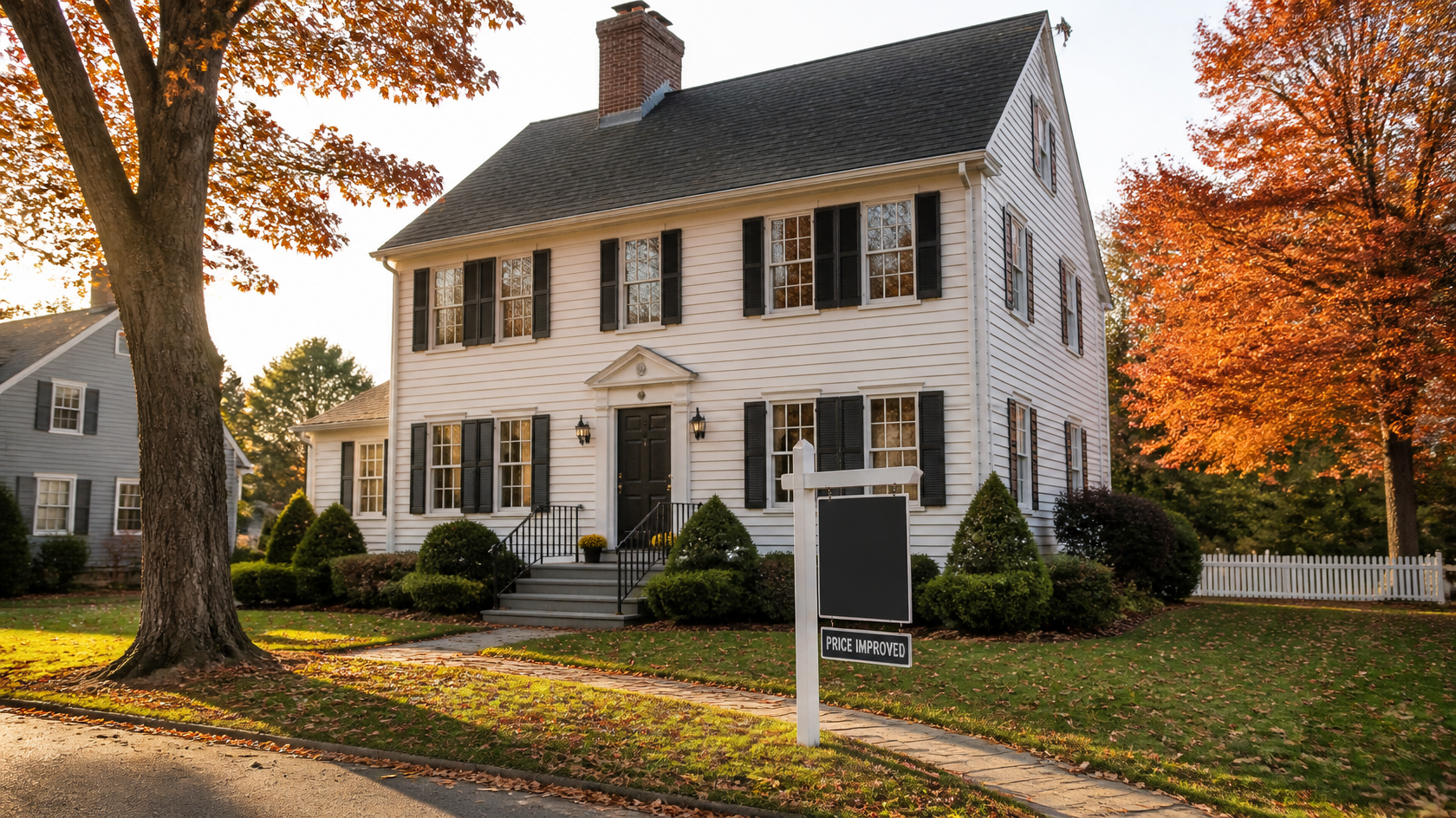
Quick answer: No. A price reduction means a seller's asking price was higher than buyers were willing to pay. It doesn't mean home values dropped. In fall 2026, the share of U.S. listings with price cuts hit its highest September level since 2018, while median sale prices set records. New Hampshire's single-family median hit a record $580,000 in July 2026.
Selling soon? Get a free home value report based on what's actually closing near you. Buying? Search New Hampshire homes for sale.
Scroll any listing site right now and you'll see it: red arrows, "price improved," homes sitting longer than they did a year ago. It's easy to decide the market is turning and values are falling. The data tells a different story, and once you understand it, you'll read the market more clearly whether you're buying or selling.
What does a price reduction actually mean?
A price reduction is a seller lowering the asking price on an active listing. It measures the gap between what the seller hoped for and what buyers are responding to.
The key distinction:
- List price is the seller's opinion of value, set before the market weighs in.
- Sale price is the fact: what a buyer actually paid at closing.
A price cut tells you a seller guessed high. To know whether values are rising or falling, you have to look at sale prices.
Are more homes getting price cuts in 2026?
Yes. Realtor.com's September 2026 housing report found 20.8% of active U.S. listings had a price reduction, the highest September reading since 2018. All four regions of the country had a higher share of price cuts than a year earlier.
The same report noted median list prices had declined year over year for 11 straight months. Asking prices are coming down. That's the headline most people see.
If price cuts are up, why are home prices still rising?
Because sellers are adjusting their asks while buyers keep paying more than they did a year ago. Redfin reported the national median sale price hit an all-time high of $408,776 in June 2026, up 2.2% year over year. In that same month, 59.5% of homes sold below their original list price.
Here's how both things happen on a single listing:
- A similar house down the street sold last fall for $690,000.
- This year, a seller lists at $750,000, anchored to a spring headline or a neighbor's best-case sale.
- Showings are slow. Three weeks later they cut to $719,000.
- It sells for $715,000.
That seller took a price reduction and sold below asking. They also sold for $25,000 more than the comparable home did a year earlier. The reduction corrected the asking price. The value still went up.
Why are so many sellers cutting their price right now?
A few forces are widening the gap between asking prices and what buyers will pay:
- More inventory. Buyers have more choices, so an overpriced listing gets skipped instead of bid up.
- Anchoring to the peak. Sellers hear about record medians and price to the best sale they've heard of instead of current comps.
- Mortgage rates and affordability. Buyers are stretched. A buyer who can't reach a number simply moves on to the next house.
- The fall slowdown. Listings priced for spring traffic get adjusted when the buyer pool thins out.
That's a market that punishes bad pricing. It isn't a crash.
Is New Hampshire different?
New Hampshire has held up better than most of the country. In Realtor.com's September report, the Northeast had the lowest share of price-reduced listings of any region, at 15.2%. New Hampshire's median single-family sale price hit a record $580,000 in July 2026, up 5.5% from the year before, according to New Hampshire REALTORS® monthly data.
Inventory has loosened. July closed at 2.7 months of supply, still a seller's market by most measures but the loosest July the state has seen in several years. That's why overpriced listings are sitting while well-priced ones still move.
Conditions vary a lot by region. Browse current listings for the Seacoast, Southern New Hampshire and the Wolfeboro and Lakes Region to see how pricing looks where you're shopping.
What should sellers do if homes around them are getting price cuts?
Price right from day one. Your first two weeks on the market are your highest-traffic window, when every active buyer and agent in your price range sees the listing fresh. Price it high and you spend that window teaching the market to skip you, then cut anyway.
The reduction isn't the expensive part. The time is. Longer days on market invite lower offers and tougher negotiations, and buyers start wondering what's wrong with the house.
Three steps before you list:
- Look at recently sold homes, not active ones. Active listings are asking prices. Solds are the market.
- Request a home value report built on closed sales in your town and price range.
- Read how we market and sell homes so you know what drives traffic in those first two weeks.
What should buyers do when they see a price reduction?
Treat the price cut as information. It's an opportunity to negotiate, and the house isn't automatically a bargain.
- Compare to sold comps. The reduced price is still an asking price. What similar homes closed for is what matters.
- Ask why it was reduced. Overpriced at launch is the most common reason. Condition, location or an inspection issue are different stories.
- Expect room to negotiate. A seller who has already adjusted once has usually reset expectations, especially on homes that have sat.
- Don't wait for a crash the data isn't showing. In most of New Hampshire, values are still rising.
Want first look at homes before they hit the open market? Join our pre-MLS access program, or search homes for sale across New Hampshire.
How can you tell if home values are actually falling?
Skip the price-cut count and watch three numbers instead:
- Median sale price, year over year. Are closed prices higher or lower than the same month last year?
- Sale-to-list ratio. Are homes closing close to asking or well below it?
- Months of supply. Lower numbers generally favor sellers. As supply climbs, leverage shifts to buyers.
Price reductions tell you how well sellers are guessing. These three numbers tell you what the market is actually doing.
Frequently asked questions
Does a price reduction mean a house is worth less?
Not necessarily. Most price reductions correct an asking price that started above market value. The home's value didn't change. The seller's estimate did.
Why do homes get price reductions?
The most common reason is overpricing at launch. Other reasons include condition issues, a slowing season, higher mortgage rates limiting buyer budgets, and more competing listings.
Are home prices dropping in New Hampshire in 2026?
Statewide, no. New Hampshire's median single-family sale price hit a record $580,000 in July 2026, up 5.5% year over year. Some towns and price ranges are softer than others, so local sold data matters more than the statewide number.
Is a price-reduced home a good deal for buyers?
It can be. A reduced home often has more negotiating room. Compare it to recent sold prices of similar homes before assuming the new price is a discount on its value.
How long should a home sit before the seller lowers the price?
There's no fixed rule. If a well-marketed home gets showings but no offers in its first two to three weeks, the price is usually the issue. Your agent should review showing feedback and new comps on a set schedule.
Get the real numbers for your town
Statewide medians are a starting point. Your street, your town and your price range can look very different.
- Thinking about selling? Get your free home value report.
- Shopping for a home? Search New Hampshire listings or explore communities by area.
- Have a question about a specific property? Send me a message or email max@thedowgroup.com.
Max Willett is a broker-associate with The Dow Group at Keller Williams, licensed in New Hampshire, Maine and Rhode Island since 2022. He specializes in Seacoast, lakefront and waterfront property and hosts the Knowledge is Power podcast.
Sources: Realtor.com September 2026 Monthly Housing Trends Report; Redfin, June 2026 home prices report; New Hampshire REALTORS® Monthly Indicators, July 2026. The pricing example above is illustrative.

Adam Dow
| The Dow Group | #1 Real Estate Team in New Hampshire
or another way